Vacuum Truck Bonding Reel: What to Look for in a Field-Ready Spool
What Is a Vacuum Truck Bonding Reel? A vacuum truck...


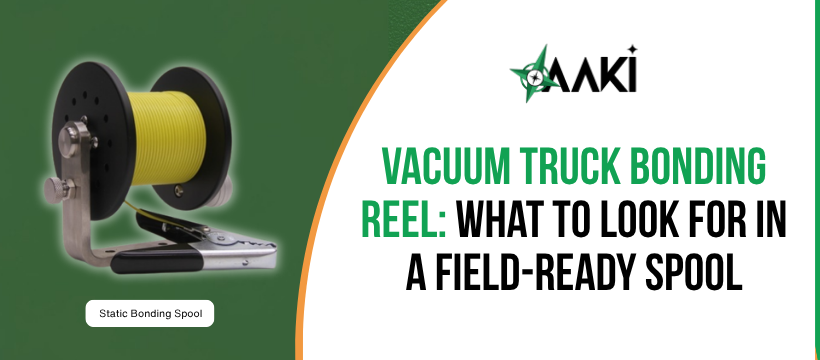
A vacuum truck bonding reel — also referred to as a bonding spool — is a piece of equipment used to establish a conductive connection between a vacuum truck and the receiving equipment during material transfer operations.
It typically consists of:
The reel allows the operator to deploy and rewind the cable as needed, making it a practical and repeatable part of the bonding process during transfer operations.

During vacuum truck operations, static electricity can be generated as materials move through hoses, piping, and other equipment.
Where flammable vapours or combustible dust may be present, an uncontrolled static discharge can become an ignition source.
A bonding reel helps control this risk by:
Proper bonding is an important part of controlling static-electricity hazards during transfer operations and should be used as part of the site’s overall electrical and hazardous-area safety procedures.
Not all bonding reels are suited to the demands of vacuum truck operations.
For operators and fleet owners, the important considerations are electrical continuity, practical handling, suitable configuration, field-ready construction, and ease of inspection.
The reel should provide a reliable conductive path between the vacuum truck and the designated bonding point.
Consistent electrical continuity depends on the complete path: clamp, cable, rotating connection, bracket, and correct installation.
Look for a reel that is electrically tested through its full range of winding and unwinding, with results documented and linked to its serial number.
A bonding reel should be straightforward to deploy and rewind after use.
A practical rewind system can help keep the cable controlled, reduce unnecessary handling, and make the reel easier to use as part of routine operations.
Cable length should suit the distances typically encountered between the truck and bonding point.
The clamp configuration should also provide a secure connection to the designated bonding location and be appropriate for the application.
Vacuum truck equipment is used in demanding working environments.
Look for a reel constructed from materials suited to regular field use, including:
These materials can withstand regular handling, exposure to site conditions, and general wear.
Consider how easily the reel can be installed, inspected, and maintained.
Clear access to connection points and straightforward inspection can support regular checks of the bonding system and help identify issues before use.
A bonding reel that is correctly selected and installed still requires regular checking before and during use.
The following points can help operators identify potential issues before they affect the operation.
It is important to note that a bonding spool does not eliminate every ignition hazard on its own.
Effective bonding depends on the complete electrical path, including relevant hoses, couplings, and conductive components, as well as how the system is installed, maintained, and inspected.

For vacuum truck operators, the difference between a reliable bonding spool and an inadequate one comes down to how it performs under real working conditions.
Here is what makes the Aaki XD worth considering.
Every Aaki XD spool is electrically tested through its full range of winding and unwinding, with results documented and linked to the spool’s serial number.
This gives operators and fleet managers a verifiable record of the unit’s performance before it goes into service.
The Aaki XD uses a manual rewind system with a large rotating handle and no rewind spring.
It is straightforward to deploy and rewind, including when working with gloves on or in cold and dirty conditions.
The spool is built from:
These materials are suited to the handling, exposure, and general wear associated with regular vacuum truck operations.
The Aaki XD is available in different cable lengths and clamp configurations, allowing operators and fleet owners to select the setup that best suits their application and mounting requirements.
Selecting a vacuum truck bonding reel is about more than choosing a cable spool. Electrical continuity, practical handling, appropriate configuration, correct installation, and ongoing inspection all contribute to an effective bonding setup.
The Aaki XD brings these considerations together through assembly-level electrical testing, manual rewind, configurable connection options, and construction intended for field applications.
For the appropriate configuration for your operation, refer to the product specifications or contact the Aaki team.
Is bonding the same as grounding?
No. Bonding equalizes electrical potential between two conductive objects. Grounding connects equipment to earth. Depending on the application and site procedure, both may be required.
Is the Aaki XD spool manually rewound?
Yes. The Aaki XD uses a manual rewind system with a large rotating handle and no rewind spring.
How do I choose cable length and clamp style?
Consider the typical distance between your truck and the designated bonding point, your mounting location, and the clamp configuration suited to your application. The Aaki XD is available in multiple cable lengths and clamp configurations.
What should be inspected on a bonding spool?
Check the cable for visible damage or wear, confirm the clamp is in good condition, and verify the spool is correctly mounted and secured before each use.
When should continuity be checked?
Before and during transfer operations, in accordance with your applicable site procedure. A deployed cable does not confirm electrical continuity.
Does a bonding spool alone make a vacuum-truck operation safe?
No. A bonding spool is one part of a broader static-control system. Effective static control depends on the complete equipment setup, correct installation, and applicable site safety procedures.
