Vacuum Truck Bonding Reel: What to Look for in a Field-Ready Spool
What Is a Vacuum Truck Bonding Reel? A vacuum truck...


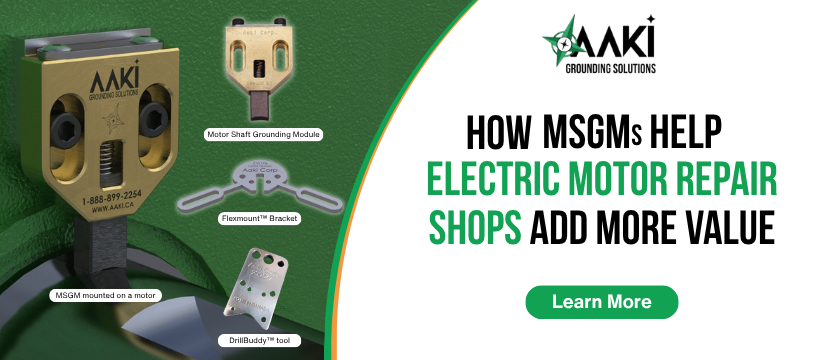
Electric motors running on variable frequency drives are common across nearly every repair shop’s workload today.
VFDs improve efficiency and control, but they also create a side effect most repair work never addresses: shaft voltage.
This voltage builds up during normal operation and discharges through the bearings, leading to:
For a repair shop, that failure often shows up again on the same motor a few months after the original repair.
The customer sees a callback. The shop sees a repeat job that costs profit and trust.
But motor shaft grounding modules close this gap.
They are a straightforward, low-cost addition to a repair job that directly prevents the failure mode causing repeat visits.
This blog explores exactly how motor shaft grounding modules help electric motor repair shops add more value.
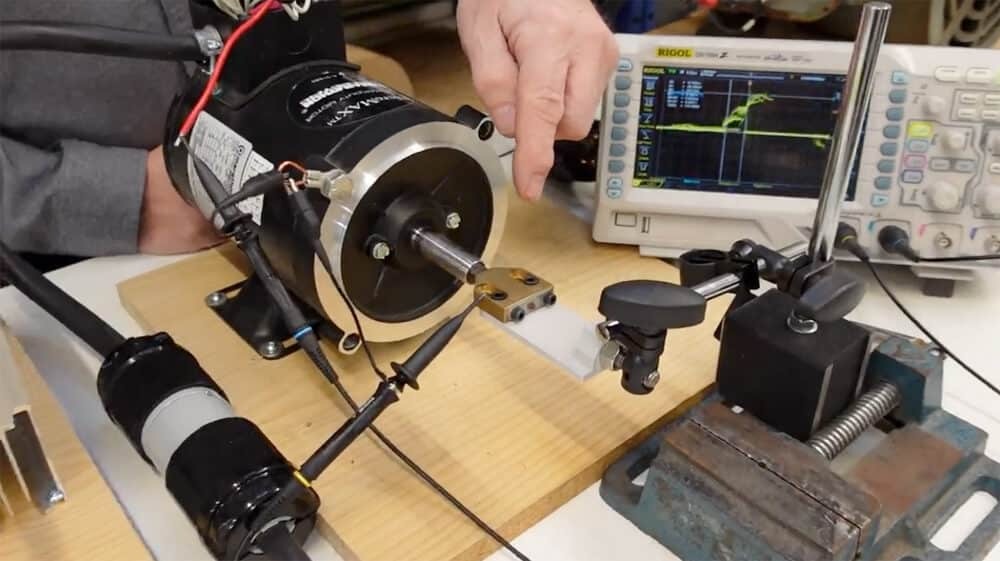
Shaft voltage is an electrical charge that builds up on a motor’s shaft during normal operation of a VFD.
Although the shaft appears to be electrically connected to the motor housing, it is actually insulated from it.
The bearing balls ride on a thin film of grease rather than making direct metal-to-metal contact with the races. This grease film acts as a dielectric barrier.
That voltage has nowhere to go until it finds a path — and the bearing becomes that path.
The discharge through the bearing creates two distinct failure signatures during a repair teardown:
Frosting appears on both:
Because the ball rotates in every direction, discharge pits become distributed across its surface, creating an overall dull finish rather than a shiny one.
Fluting appears specifically on the race.
Repeated electrical discharges in the same contact area create a visible wave-like pattern.
These discharges can happen hundreds of times per minute, and every discharge adds additional wear.
A bearing damaged this way was never going to last, regardless of how well the rest of the repair was completed.
Rewinding, balancing, and bearing replacement fix what already broke.
They do not prevent electrical discharge from damaging the bearings again.
A motor repaired this way returns to service carrying the same vulnerability that caused the original failure.
The same bearing failure typically follows within months, and the repair shop absorbs:
This cost is avoidable with proper motor shaft grounding protection.
That is why grounding should be part of the repair process — not an afterthought.
An electric motor repair shop that adds shaft grounding to its repairs gains three major benefits:
Standard repair restores the motor mechanically:
However, none of these prevent electrical discharge from damaging the bearings.
A shop that installs shaft grounding is addressing the underlying vulnerability instead of only repairing the damage.
This allows the shop to provide a complete repair solution rather than solving only half the problem.
A repeat bearing failure costs the customer:
Installing shaft grounding during the original repair redirects electrical discharge away from the bearings.
The next service call becomes scheduled maintenance instead of an emergency repair.
Shaft voltage can also affect connected equipment.
Any equipment mechanically connected to the motor that contains bearings or conductive components may be exposed, including:
A bearing failure in attached equipment or corrosion in a fan assembly may trace back to shaft voltage generated by the motor.
Installing a grounding module protects not only the motor bearings but also connected equipment.
Recommending grounding only on VFD-driven motors — rather than every motor — shows proper diagnosis, not unnecessary upselling.
A repair shop that identifies and solves these issues becomes the trusted choice customers return to for future repairs.
Adding shaft grounding provides benefits beyond preventing a single failure.
Removing the discharge path removes the primary cause of premature bearing wear on VFD-driven motors.
Bearings installed during a grounded repair can reach their expected mechanical lifespan instead of failing early due to untreated electrical damage.
Repair quality is measured by how long the repair lasts, not just how well the motor tests before leaving the shop.
Addressing shaft voltage alongside mechanical repairs ensures the motor performs under real operating conditions.
Shaft grounding is a billable addition to an existing repair.
With the right mounting system, such as Aaki’s FleXmount™ system, installation adds only minimal time to a repair already underway.
This gives shops an additional service opportunity for VFD-driven motors without creating a separate service call.
A bearing failure caused by untreated electrical damage during the warranty period becomes a cost absorbed by the repair shop.
That may include:
Removing the cause during the original repair helps prevent these avoidable warranty claims.
Shaft grounding is not necessary for every motor.
It provides the most value in specific situations.
VFD operation creates shaft voltage.
Motors running on variable frequency drives are the primary candidates for grounding modules because the risk is directly related to drive operation.
The cost of a grounding module is small compared with the replacement cost of large motors.
For higher horsepower motors, preventing repeat failures provides significant value.
A motor that has already experienced electrical bearing damage is likely to fail again unless the root cause is addressed.
Repeated failures are a strong indicator that shaft voltage may be the underlying issue.
Some motors power equipment where downtime is extremely expensive, including:
For these applications, preventing unexpected failures is often more valuable than the motor replacement cost alone.
Bearing failures or corrosion in connected equipment may sometimes trace back to shaft voltage from the motor.
If downstream equipment is repeatedly failing and the motor is VFD-driven, shaft grounding should be considered.
Shaft voltage can also contribute to electrical interference.
VFD switching creates high-frequency voltage spikes that may affect:
A grounding module can help reduce the shaft-related component of this interference.
It will not eliminate all electrical noise, but it removes one significant source.
Choosing a grounding module involves two decisions:
Modules must match the motor’s:
Aaki’s Motor Shaft Grounding Modules are available in standard and mini sizes to cover most applications.
Mounting is often the more challenging part of installation.
Every motor has different endbell geometry.
Proper installation requires:
Aaki manufactures mounting hardware specifically for its modules to simplify installation.
The FleXmount™ system allows the mounting arm to be shaped using the FleXform™ tool, reducing alignment issues common with fixed mounting systems.
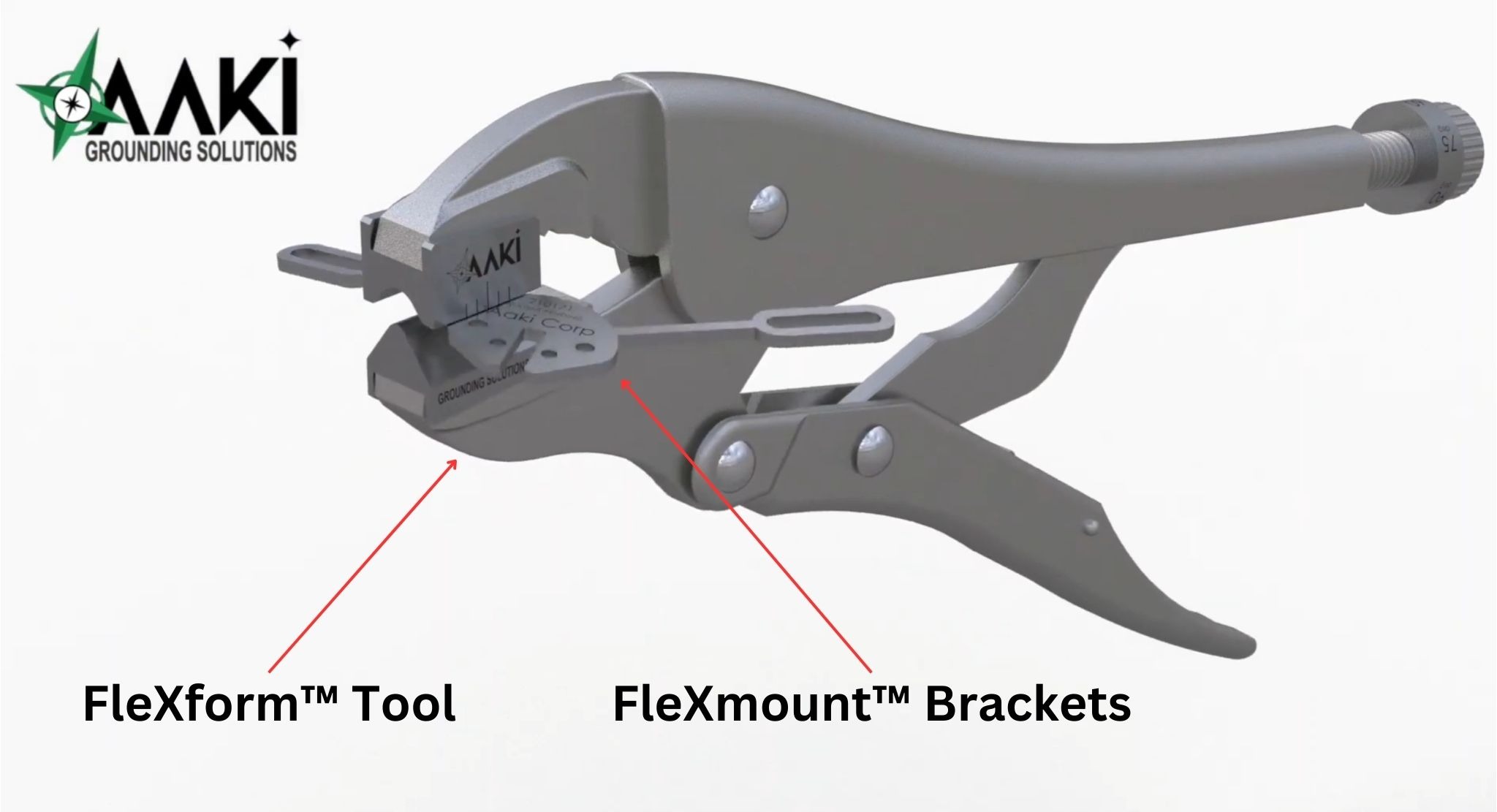
Aaki’s Motor Shaft Grounding Modules include:
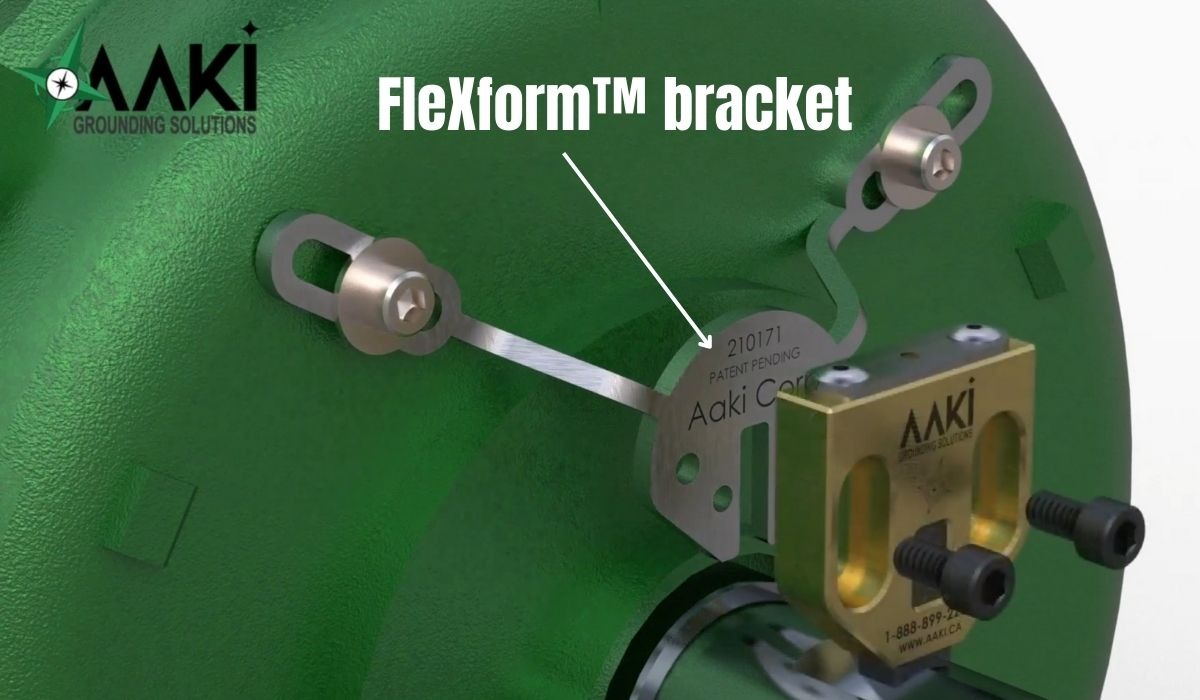
The modules are designed to operate in the same dusty and greasy environments where industrial motors operate.
The DrillBuddy™ tool helps ensure accurate hole placement, creating a clean and professional installation.
Repeat bearing failures on VFD-driven motors are rarely caused by poor repair work.
More often, the repair fixed the damage without addressing what caused it.
Motor shaft grounding modules close that gap.
By offering shaft grounding consistently, repair shops can:
Ready to add shaft grounding to your service menu?
Explore Aaki’s Motor Shaft Grounding Modules or speak with the team about the right solution for your shop.
A motor shaft grounding module is a device designed to protect motor bearings from unwanted electrical currents, including VFD-induced shaft currents.
It provides a safe path for electrical current to flow away from bearings, helping prevent:
Yes.
They specifically help prevent failures caused by shaft voltage discharge on VFD-driven motors.
By redirecting electrical discharge away from bearings, grounding modules address the root cause instead of only treating the damage.
Shops should recommend shaft grounding when:
Motor shaft grounding modules help shops by:
No.
Modern mounting systems, including spacers, extension plates, and the FleXmount™ system, simplify installation.
With the right setup, installation that previously took over an hour can typically be completed in twenty minutes or less.
