Why Electric Motor Repair Shops Are Adding Motor Shaft Grounding Modules to Every VFD Motor Repair
A motor repaired recently can still fail again, and the...


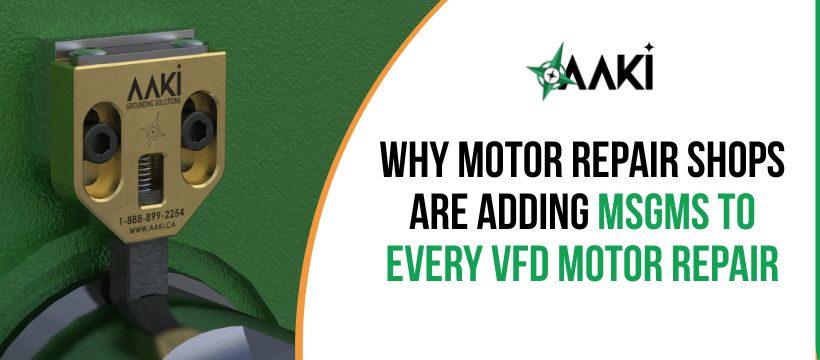
A motor repaired recently can still fail again, and the reason often has nothing to do with the repair itself. On VFD motors, electrical currents build up on the shaft as the motor runs and discharge through the bearing, wearing it down in a pattern no visual inspection catches until the damage is already done.
Many repair shops are catching on to this and changing how they handle every VFD motor that comes through the door. Instead of replacing a bearing and sending the motor back out, shops are adding a shaft grounding module as a standard step, not just for motors that already show signs of trouble, but for every VFD repair, regardless of history.
This change happened as shops kept running into the same problem: there’s no reliable way to tell which motor will develop shaft voltage damage and which won’t. This is why grounding is becoming routine and what it actually changes for both the shop and the customer.
VFDs power a motor by rapidly switching electrical current on and off, and that switching induces voltage on the motor shaft itself. With nowhere else to go, that voltage discharges through the bearing, pitting the metal in a pattern known as fluting, a series of tiny grooves that build up over time and eventually cause the bearing to fail.
None of this shows up during a standard repair. A bearing can look fine on inspection while shaft voltage is already wearing it down from the inside, which is exactly why the damage tends to surface only after the motor is already back in service.
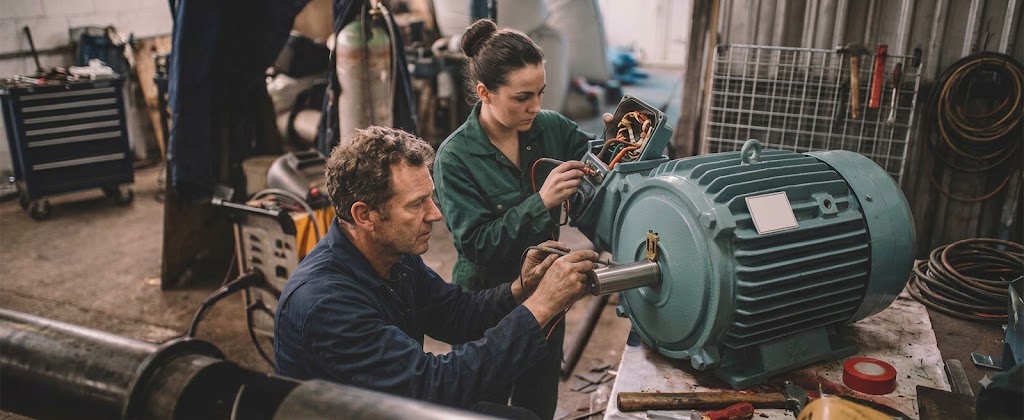
Shops used to decide case by case whether a motor needed shaft grounding, often based on the motor’s history or how critical the application was. That approach only works if the risk is visible early, and shaft voltage damage isn’t.
Fluting can take months to develop, often well past the point where a standard bearing warranty has already expired, so a motor that looked fine at the time of repair can still fail later with no way to connect the failure back to a cause anyone could have caught.
That gap is why more shops are dropping the case-by-case approach altogether.
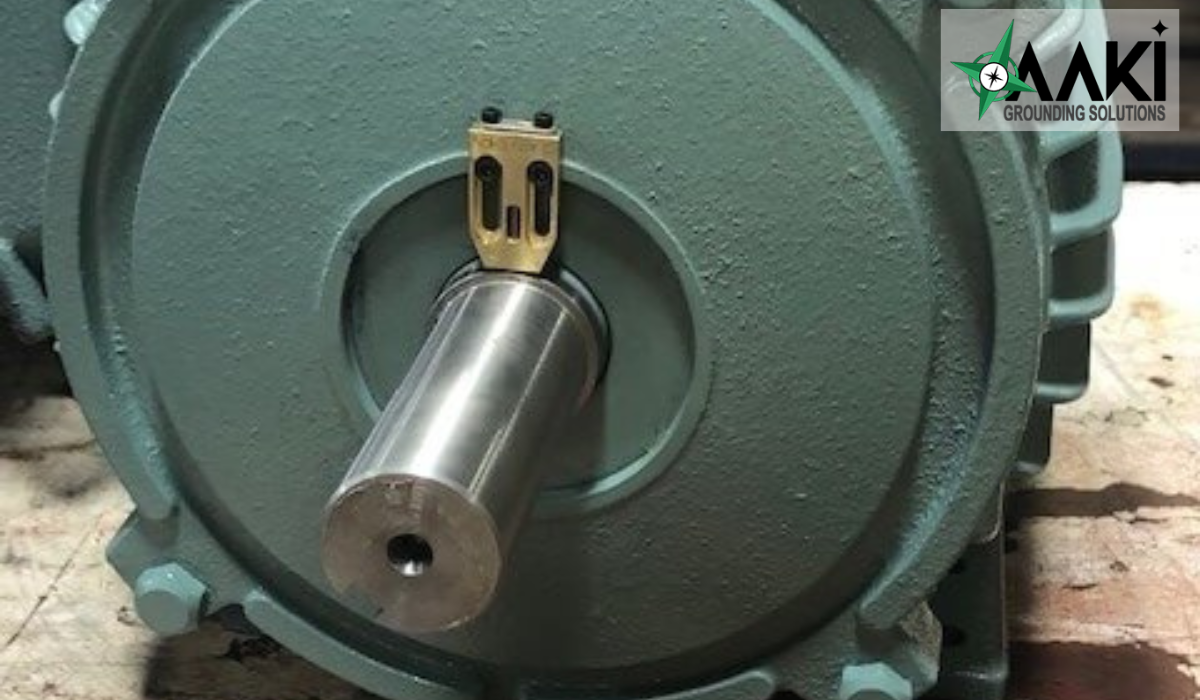
A shaft grounding module gives shaft voltage somewhere else to go. A conductive brush mounted against the shaft channels the voltage safely to the motor frame, rerouting it away from the bearing before it can build up and discharge there.
That changes what the repair is actually protecting. Replacing a worn bearing without grounding the shaft fixes the damage that’s already happened, while leaving the same voltage in place to start the process again on the new bearing. Adding the module closes that gap, so the repair addresses the actual cause of the failure, not just its most recent result.
A repair done this way holds up longer, because the thing that wore out the last bearing is no longer acting on the new one.
Adding shaft grounding to a repair only works if it doesn’t turn into a bigger job. These four points are what make it a simple addition rather than a complication.
Installing the module alongside the bearing replacement takes minutes and requires no separate visit or follow-up job. It’s done in the same appointment as the repair itself, using the same access to the shaft the technician already has open.
Because installation is this fast, protecting the motor long-term doesn’t push back how quickly it goes back into service. A motor leaves the shop with the same turnaround time, just with years of added protection built in.
A grounding module costs a fraction of what a repeat bearing failure costs in parts, labour, and a customer’s trust. Added as a small line item to a repair that’s already underway, it’s an easy cost to justify compared to a comeback down the line.
One module design fits a wide range of horsepowers, configurations, and shapes, so there’s no need to source a different part depending on which motor is on the bench. That flexibility is part of what makes it practical to apply as a default step, not an exception.
Beyond what it does for the motor, this shift changes something for the shop itself: how the business is seen by the customers who depend on it.
A repair that addresses the actual cause of bearing failure, not just the worn part, is a genuinely better repair, and it’s the kind of work a shop can stand behind without qualification.
Fewer callbacks mean fewer conversations explaining why a motor failed again so soon after being serviced and more customers who simply don’t have to think about that motor again.
Not every shop is making this standard yet. The ones that are can point to something concrete that separates their repairs from a shop doing the minimum to get a motor running again.
Every VFD repair becomes an opportunity to deliver more than what was asked for, without asking the customer to seek out a separate fix for a problem they may not even know they have.
A shop that adds this to every VFD repair is telling customers something without having to say it: that the job is being done right, not just finished. With a module that installs in minutes and fits nearly any motor on the bench, that standard is easy to keep.
Shaft voltage doesn’t announce itself during a repair, which is exactly why deciding motor by motor whether to add grounding has stopped working for so many shops. The damage builds quietly, often on a longer timeline than most warranties cover, until a motor that should still be running well ends up back on the bench.
Making shaft grounding standard on every VFD repair isn’t a bigger job; it’s a smarter one. It protects the work a shop has already done, and it gives customers a motor that’s actually less likely to come back.
Aaki’s Motor Shaft Grounding Modules are built for exactly this shift: fast to install, compatible with a wide range of motors, and priced to fit into a repair without changing the job. If your shop is still deciding case by case, it might be worth asking what a repeat failure actually costs compared to adding the module now.
Explore Aaki’s Motor Shaft Grounding Modules and see how easily this fits into your next VFD repair.
Does every VFD motor need shaft grounding?
Any VFD-driven motor can develop shaft voltage, regardless of size. Larger or continuously running motors are often higher priority, but the risk isn’t limited to them.
Can it be added after the motor’s already in service?
Yes, it can be retrofitted at any time, though it’s often done during a scheduled repair for convenience.
Does it fit motors from any manufacturer?
Yes, Aaki’s modules are designed to fit a wide range of motors irrespective of their horsepower, configurations, and shapes.
How often does it need to be checked or replaced?
Depends on usage, but a visible wear window lets a shop check the brush’s condition during routine service.
